THE PHYSICS
Shape does the lifting
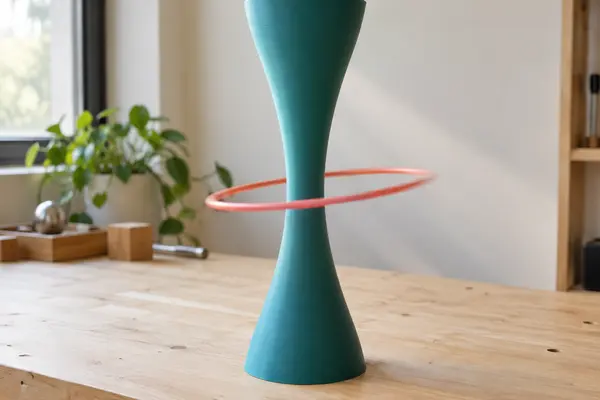
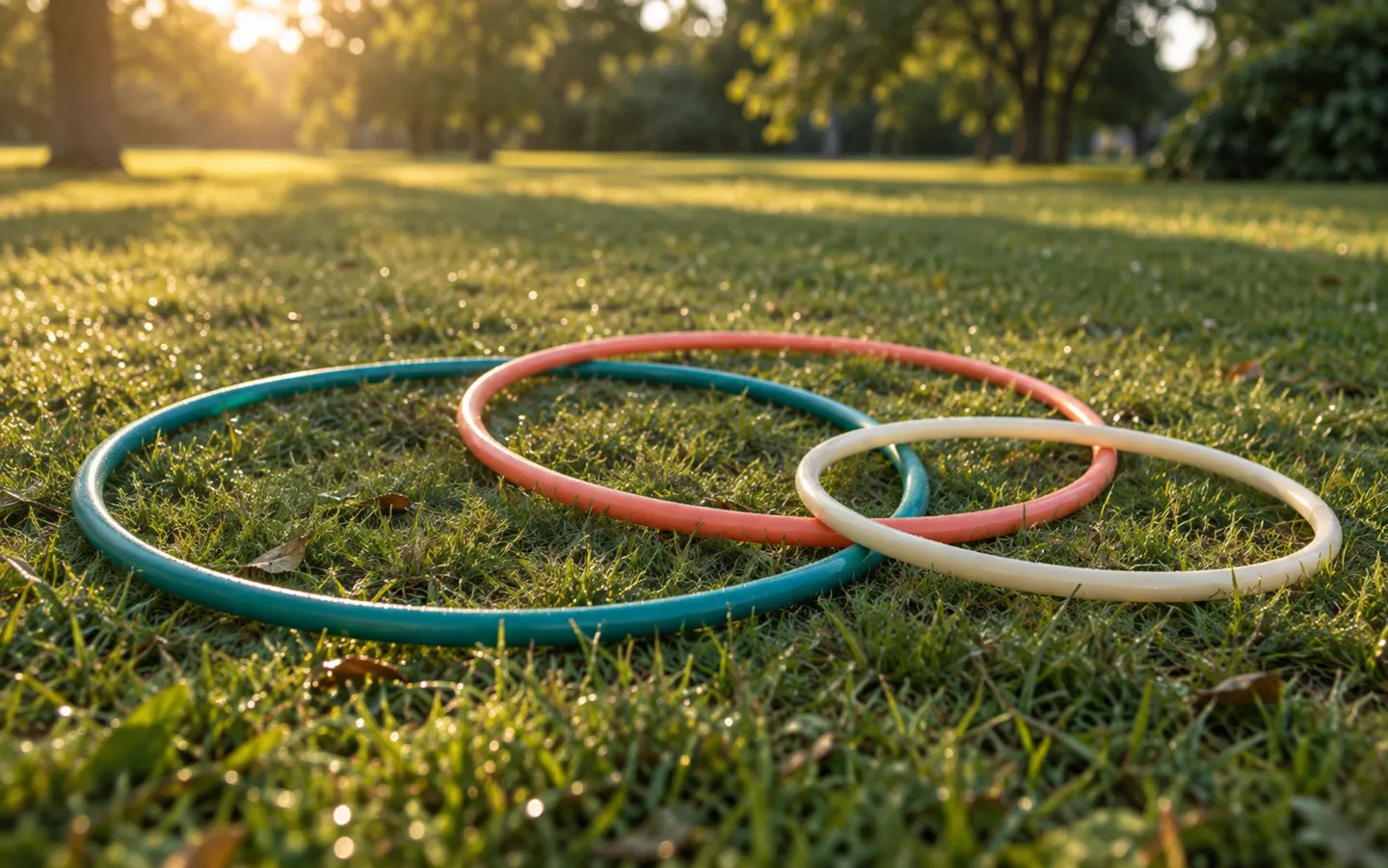
Robot experiments showed a hoop stays up only on a body with sloped hips and a curved waist.
Try the shape check doodlehoops
THE SCIENCE OF A SPINNING RING
A plastic ring, a wiggle of the hips, and a surprisingly tidy piece of physics.
HIPS + a waist
≈210 calories A 30-minute hooping workout
For decades nobody could say exactly why a hula hoop climbs instead of falling. In 2024, mathematicians worked it out with small robots. Here is what they found, where the hoop came from, and what studies say about hooping as exercise.
Plain English, with the sources linked.
THE SHORT ANSWER
A hoop needs to keep pace with the body,
then the body’s shape does the lifting.
THE PHYSICS
Robot experiments showed a hoop stays up only on a body with sloped hips and a curved waist.
Try the shape checkTHE WORKOUT
Experienced hoopers burned about 7 calories a minute in a 30-minute session in one study.
See the studiesTHE HISTORY
Hoops are ancient, but plastic hoops turned them into a huge craze in the late 1950s.
Read the factsA QUICK SHAPE CHECK
Pick a body shape. The answers come from robot experiments at New York University, published in the Proceedings of the National Academy of Sciences, in which motor-driven 3D-printed bodies twirled small hoops.
The robots were about one-tenth human size, with hoops about 15 cm across. People are not cones or cylinders, but the same forces apply.
GIVE IT A SPIN
The physics says the hoop must keep pace with the body, which needs a strong enough launch in the same direction that you sway.
Sloped surfaces lift a hoop and curves hold it. If it keeps sinking, notice where on your body it settles best.
The NHS suggests at least 150 minutes of moderate activity, or 75 vigorous, each week. Hooping sessions can be part of that.
In the 2019 trial, hooping and walking helped in different ways. Doing both covers more ground than either alone.
TWO STUDIES WORTH KNOWING
Small studies, but both found
hooping is more than a toy.
≈210 calories
A 30-minute hooping workout
Sixteen women aged 16 to 59, all intermediate or advanced hoopers, burned about 7 calories a minute. Their heart rate averaged 151 beats a minute, about 84% of their age-predicted maximum. The study ran at the University of Wisconsin–La Crosse.
ENERGY · 2011
−3.1 cm vs −0.7 cm
Waist change after six weeks
In a Finnish trial, 55 overweight adults spent six weeks hooping with a 1.5 kg hoop for about 13 minutes a day, and six weeks walking more. Hooping trimmed the waist more; walking did better on blood pressure and “good” HDL cholesterol.
WEIGHTED HOOP · 2019
Neither study was large, and the first used experienced hoopers. Treat the numbers as a guide to what is possible, not a promise.
HOOP FACTS
“Hula” comes from the Hawaiian dance, because hooping uses a similar movement of the hips. Hoops themselves have been children’s toys since ancient times.
Light plastic hoops arrived in the 1950s. After a US launch in 1958, sales were estimated at 100 million in the United States alone within two years.
In the NYU robot experiments, the exact motion and whether the body’s cross-section was round or oval did not matter: good twirling could be set up “without any special effort”.
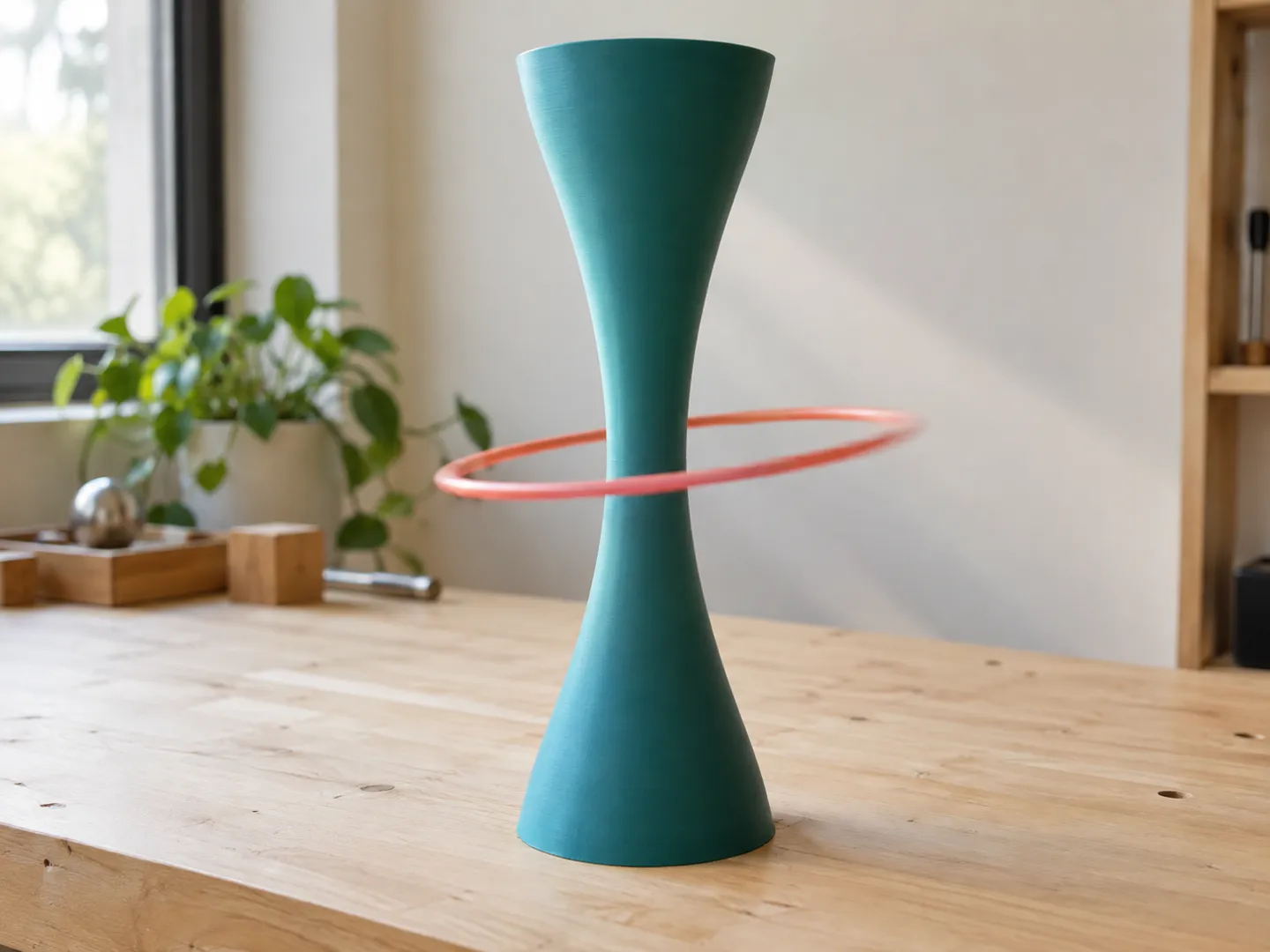
Holding a hoop against gravity needed a sloping surface at the “hips” to push it up at the right angle and a curvy “waist” to keep it there. Cones and cylinders failed.
In the 2019 trial, walking, but not hooping, lowered systolic blood pressure and raised HDL cholesterol. Hooping reduced waist size and increased trunk muscle mass.
QUICK QUESTIONS
Short answers to the questions people ask most.
Body shape plays a part. A 2024 study at New York University found that a hoop needs a sloping surface to push it upwards and a curved waist to hold it in place. Technique matters too: the hoop has to be launched fast enough, in the same direction the body moves.
In a 2011 study funded by the American Council on Exercise, 16 experienced hoopers burned about 7 calories a minute, roughly 210 calories in a 30-minute workout, with an average heart rate of 151 beats per minute.
In a 2019 trial with 55 overweight adults, about 13 minutes a day with a 1.5 kg hoop for six weeks reduced waist circumference by 3.1 cm on average, against 0.7 cm after six weeks of extra walking. It was a small, short trial.
From the hula, the Hawaiian dance, because hooping uses a similar hip movement. Hoops themselves have been children’s toys since ancient times; the plastic version became a craze in the late 1950s.
It can. Experienced hoopers in the 2011 study averaged about 84% of their age-predicted maximum heart rate. The NHS advises adults to aim for at least 150 minutes of moderate activity, or 75 minutes of vigorous activity, a week.
Updated
A NAME WITH A SPIN
doodlehoops.com is part of the DoodleSale portfolio. It isn't in an auction right now, but you can ask about leasing it.